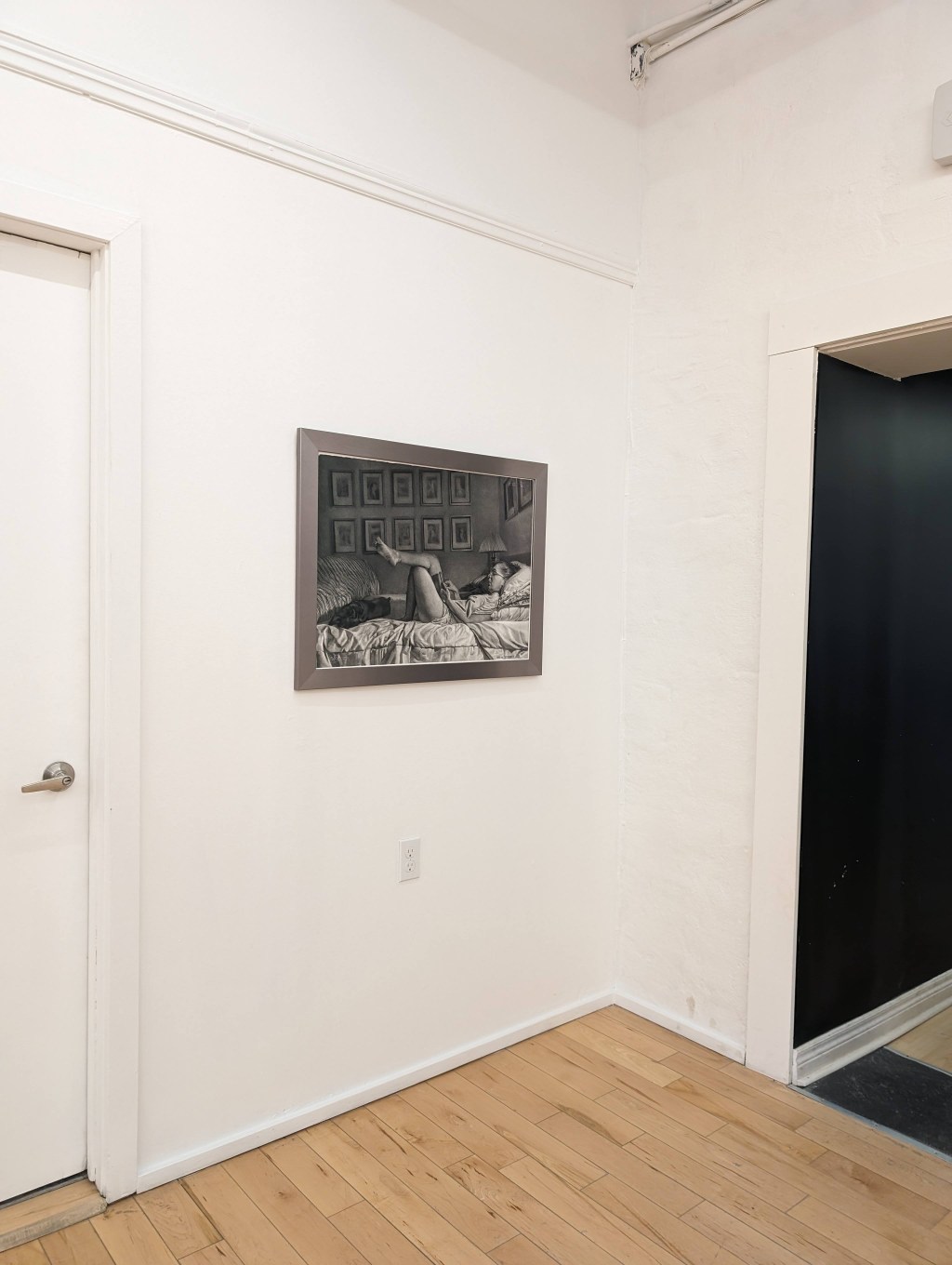

In the midst of social gatherings, I often find myself exercising restraint when the topic of art arises. It’s a subject as delicate as the threads of a spider’s web, akin to the impassioned realms of religion or politics. Unlike the latter two arenas, where opinions flow freely like a torrential river, discourse surrounding art often stagnates in shallow pools of superficial observation.

The ubiquitous refrain of “My kid could do that” echoes through the halls of galleries and museums, a sentiment I find irksome. Of course, such remarks belie a fundamental misunderstanding of the creative process. Crafting a work of art is not akin to assembling a humble quesadilla; it requires a depth of vision, skill, and often, a willingness to bear one’s soul to the scrutiny of the world.
Consider the viral video making rounds on social media, in which a university professor dupes unsuspecting viewers into admiring what they believe to be a Jackson Pollock masterpiece, only to reveal it as a mere cleaning cloth. While the clip may serve as fodder for those quick to dismiss modern art as a farce, it fails to capture the essence of artistic expression.
Art, you see, transcends the confines of time and space. To judge a work through the lens of contemporary sensibilities is to deny its historical context and cultural significance. Take, for instance, the Mona Lisa. In an era saturated with meticulously rendered portraits, da Vinci’s enigmatic masterpiece shattered conventions, ushering in a new paradigm of artistic exploration.

Similarly, the audacious brushstrokes of Picasso’s “Les Demoiselles d’Avignon” and the frenetic energy of Pollock’s drip paintings challenged the very essence of what constituted art. And who could forget Maurizio Cattelan’s infamous duct-taped banana, a cheeky commentary on the commodification of creativity?
It’s easy to dismiss these works as mere whimsy or pretension. Yet, buried beneath the surface lies a profound truth: true artistry demands vulnerability. To create is to expose oneself to the merciless gaze of criticism, to lay bare one’s innermost thoughts and emotions in pursuit of beauty or truth.
So, the next time you find yourself in the presence of a work of art, resist the urge to utter those four dreaded words. Instead, pay homage to the artist’s courage, their willingness to strip away the layers of pretense and reveal their innermost selves to the world. In doing so, you may just uncover a deeper understanding of the human experience—one that transcends the boundaries of language and defies the constraints of time.
In conclusion, art is not merely a product of skill or technique; it is a testament to the human spirit, a mirror reflecting the complexities of our existence. To reduce it to a mere commodity or trivial pursuit is to overlook its profound capacity to inspire, challenge, and provoke. So let us approach art not with skepticism or disdain, but with humility and curiosity, ready to engage with the stories it has to tell and the truths it has to reveal.


 Carlos Fentanes
Leave a comment